

Table of Contents
Singapore’s vibrant economy attracts entrepreneurs and professionals from around the world. Understanding the right Singapore work visa, responsibilities as an employer or employee, and how to handle changes or renewals is key to a successful experience in Singapore. This comprehensive complements our
Singapore immigration and work visa services overview and covers all the essentials.
Main Work Visa Options in Singapore
1. Employment Pass (EP)
For professionals, managers, and executives with a qualifying salary and recognized qualifications. Requires employer sponsorship. For detailed eligibility criteria and application guidance, see our Singapore Employment Pass guide
4. Personalized Employment Pass (PEP)
A premium pass for high-earning professionals, not tied to an employer, offering flexibility across jobs and sectors.
Eligibility Requirements Comparison
| Pass Type | Key Eligibility | Official Guide |
|---|---|---|
| Employment Pass (EP) | Job offer from a Singapore employer, recognized qualifications, minimum salary set by MOM | MOM EP Guide |
| EntrePass | Entrepreneur, innovator, or investor in a qualifying sector; business plan; innovation/funding proof | MOM EntrePass Guide |
| S Pass | Mid-level skilled job offer, recognized qualifications, minimum salary | MOM S Pass Guide |
| Personalised Employment Pass (PEP) | High-earning professionals, salary-based eligibility, not company-tied | MOM PEP Guide |
Work Visa Application Process (Infographic)
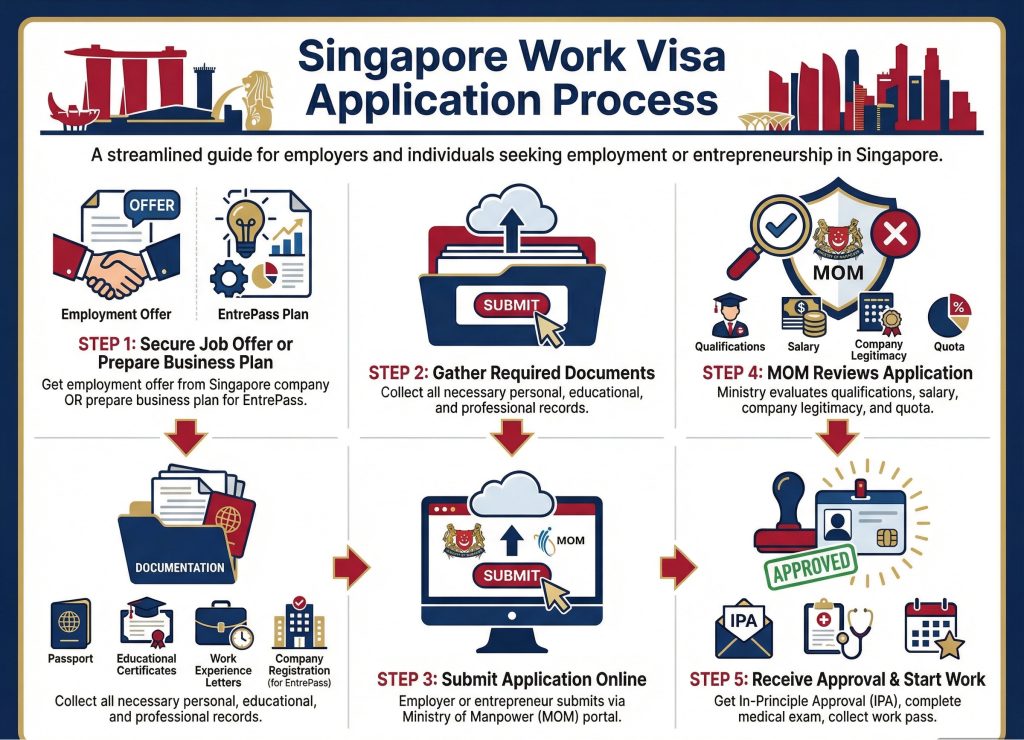
Employer & Employee Responsibilities
- Employers must apply for and renew work passes, ensure Ministry of Manpower (MOM) compliance, and report job changes or terminations.
These obligations form part of broader corporate compliance responsibilities in Singapore. - Employees must work only in the approved role and company, comply with pass conditions, and notify MOM of significant changes.
What Happens When Your Work Visa Expires?
- Singapore work visas are typically valid for 1–3 years; check your pass for details.
- Renew before expiry to avoid work disruption or loss of legal status.
- If not renewed, you must cease work and leave Singapore by the deadline.
- Employers are responsible for repatriating foreign workers if required.
Changing Jobs or Working Environment
- EP/S Pass holders: New employer must apply for a new pass; only start work after approval.
- EntrePass: Major business changes require MOM approval; company must remain in a qualifying sector.
- PEP holders: Change jobs freely, but inform MOM within 7 days of any change.
- Unauthorized job changes or working outside the approved scope can result in pass cancellation or penalties.
Frequently Asked Questions (FAQs)
Can I bring my family to Singapore on a work pass?
EP and PEP holders can apply for Dependant Passes or Long Term Visit Passes for eligible family members.
Can I apply for Permanent Residency (PR)?
Employment Pass, EntrePass, and S Pass holders may be eligible for PR after working in Singapore; each application is individually reviewed by ICA.
What if I lose or change my job?
You must secure a new work pass through your new employer before starting work. PEP holders must notify MOM of any job change within 7 days.
How long does it take to process a work pass?
Typically 1–3 weeks, but processing times can vary. Check MOM for updates.
Conclusion
Singapore’s work visa system offers diverse pathways for entrepreneurs and professionals. By understanding your options, eligibility, and responsibilities, you can ensure a seamless and compliant experience. For complex cases or renewals, consult a licensed Singapore immigration or HR expert.
- Processes and requirements may vary based on visa types and latest MOM policies. Consult official source for up-to-date information.
The information provided on this blog is for general informational purposes only and is not intended to constitute legal, tax, immigration, or professional advice. While we strive to keep the content accurate and up to date, regulatory requirements and policies in Singapore may change over time.
Readers should seek appropriate professional advice or consult relevant government authorities before making any business, legal, or compliance decisions. Terra Advisory Services and its affiliates disclaim any liability for actions taken or not taken based on the content of this blog.